14 Bridesmaid Hairstyles (2026)
Being asked to be a bridesmaid is an honor — and a styling puzzle. You want to look beautiful in photos that will live on mantels for decades, stay comfortable through a ten-hour day, and most importantly, support the bride without stealing her spotlight. This guide covers everything: 14 gorgeous bridesmaid hairstyles for every hair length and texture, step-by-step how-tos, real product recommendations, how to coordinate a whole bridal party without forcing everyone into the same look, trial timelines, who pays, and the all-day hold system that keeps every style fresh from the ceremony to the last dance.
The Golden Rule: Coordinated, Not Identical
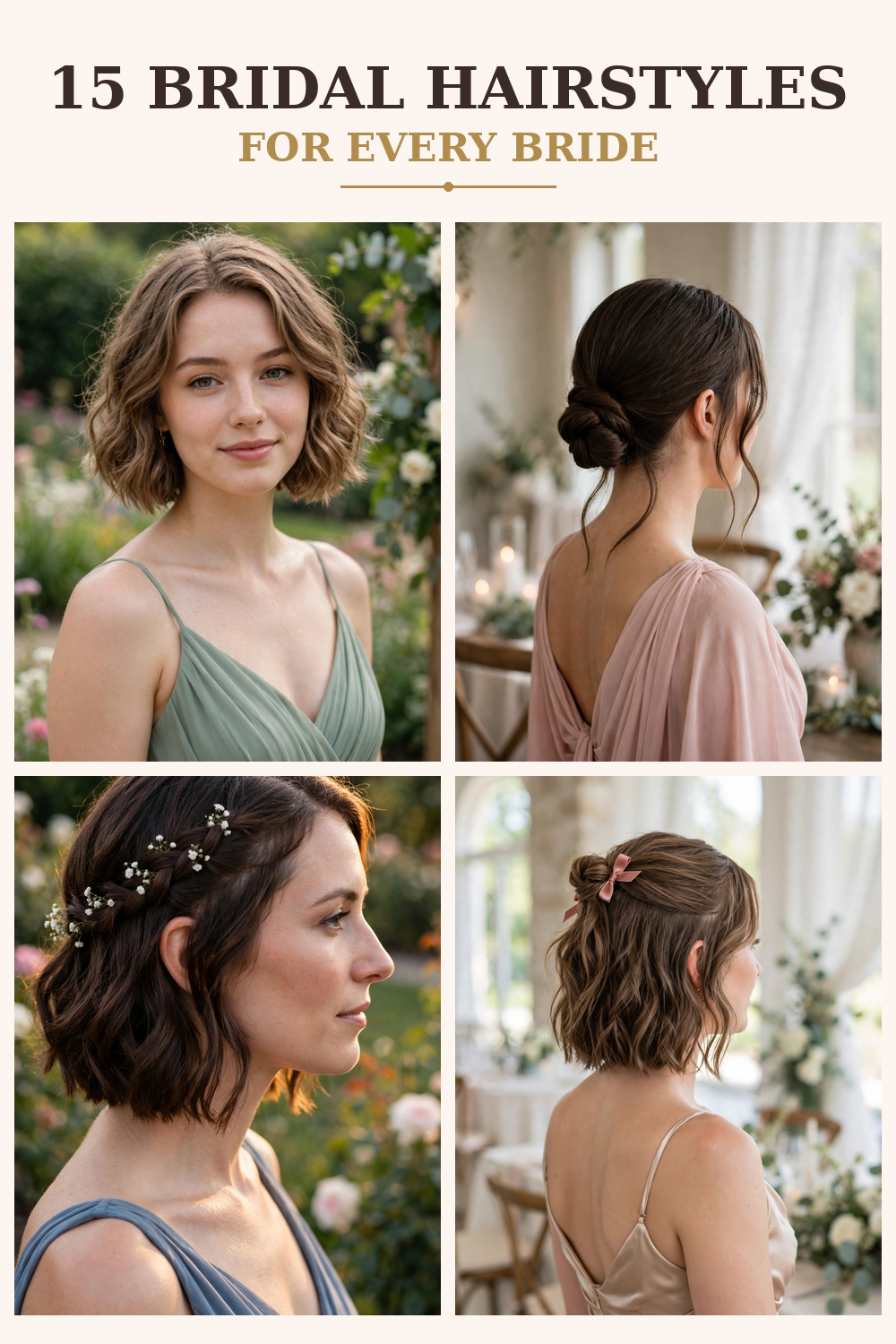
Here’s the decision framework professional stylists use: pick a style category, not a single style. Trying to force one exact hairstyle on five women with different hair types, lengths, and face shapes almost always backfires — someone looks stiff, someone looks underdone, and nobody feels like themselves.
Instead, the bride (or the group, if she’s flexible) chooses one of these unifying directions:
– All up — every bridesmaid wears some kind of updo (chignon, bun, twist, braided updo) – All half-up — every look pulls back the top half, with the rest down – All down — loose curls, waves, or sleek styles, possibly with a shared accessory – Shared accessory — different styles, but everyone wears the same pearl pins, hair vine, or floral element
This approach is what makes wedding-party photos look cohesive: the eye reads the category and vibe, not the exact technique. If your bridesmaids range from a pixie to waist-length curls, a shared accessory — the same delicate crystal hair vine or a small sprig of baby’s breath — unifies the group better than any single style could. Our companion guide to easy wedding hair for bridesmaids with short hair covers the short-hair side of this in full detail.
Up vs. Down: How to Decide
Before choosing a style, run through these five factors:
1. Formality. Black-tie ballroom? Updos read more formal. Garden or beach ceremony? Half-up and down styles feel right at home.
2. Dress neckline. High necklines and halters pair beautifully with updos (they show off the neckline’s detail). Strapless, sweetheart, and off-the-shoulder dresses love soft waves or side-swept styles that fill the frame.
3. Weather. Humidity, wind, and heat are the enemies of loose styles — for outdoor summer weddings, lean up or half-up.
4. Hair reality. Work with each bridesmaid’s actual hair. A great updo on fine hair needs padding or a different construction than the same style on thick hair.
5. Comfort. A style that hurts by hour three will show in every photo. Heavy, tight styles are a day-ruiner — ask each bridesmaid what she can actually wear for ten hours.
Elegant Updos & Chignons
Updos are the workhorses of bridesmaid hair: they stay put, photograph beautifully from every angle (including the back-of-ceremony shots), and keep hair off necks during long days.
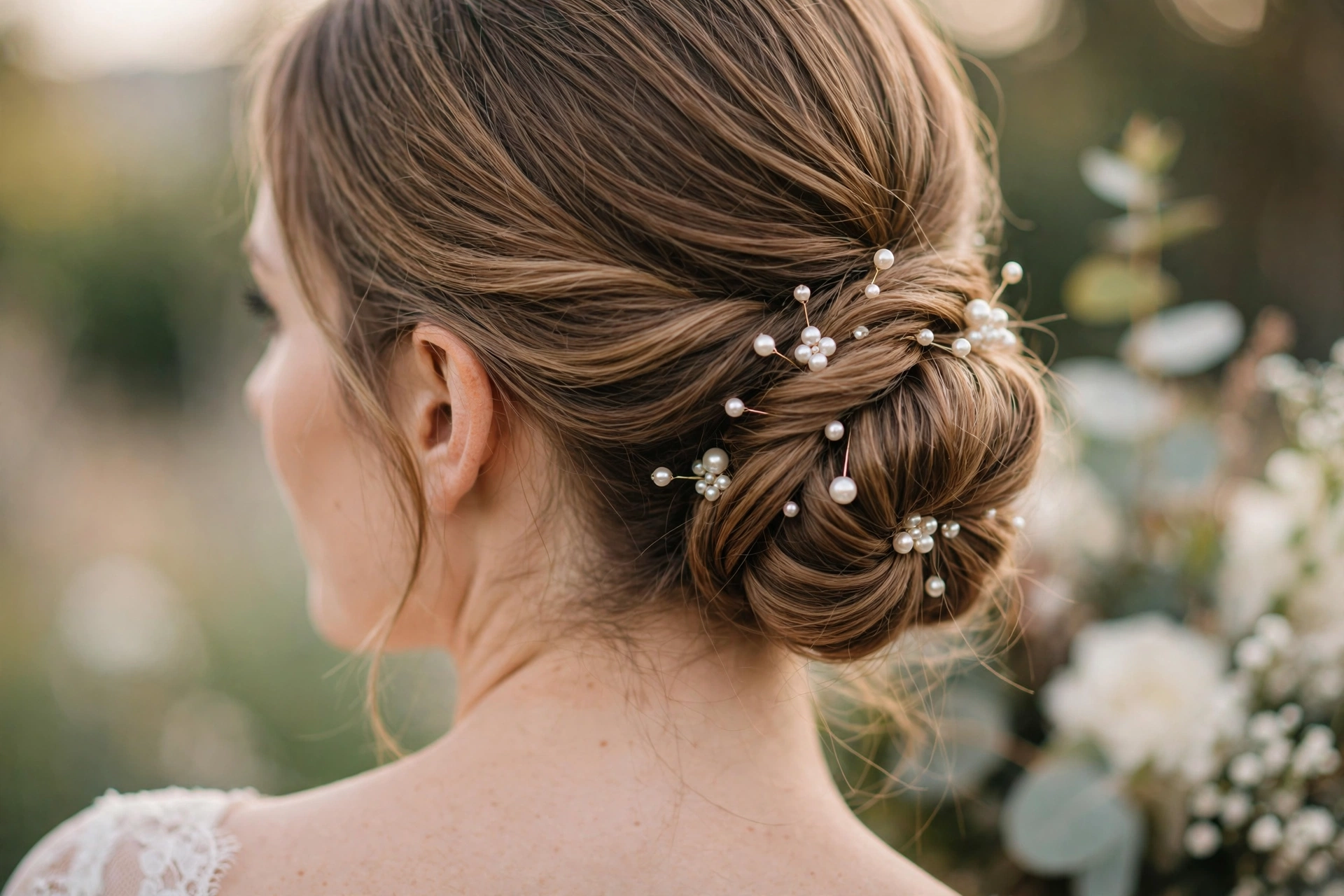
1. Low Chignon with Pearl Pins
The most timeless bridesmaid style in existence — a soft bun at the nape, finished with scattered pearl pins.
How to: Prep with a texturizing spray (day-old hair holds better than freshly washed). Pull hair into a low ponytail at the nape, twist the tail loosely, and wrap it around its base, pinning as you go with quality bobby pins. Pull a few face-framing strands loose and wave them lightly. Slide 5-7 pearl pins (like the Kitsch pearl bobby pins, ~$8 at Ulta) in at varied angles.
Who it suits: Every face shape and almost every hair texture. For thick, heavy hair, a low chignon distributes weight closer to the neck, so it stays comfortable far longer than a high bun. Works for church weddings, black-tie, and classic venues.
Common mistake: Pinning it too tight and sleek reads severe in photos. Keep it soft — texture is what makes a chignon look 2026 instead of 2006.
2. Textured Low Bun
The chignon’s relaxed cousin: a loosely gathered bun with deliberate texture and wispy tendrils.
How to: Curl the hair first with a 1.25-inch iron, then gather loosely at the nape without brushing out the curls. Twist into a bun shape and pin, leaving the ends slightly undone for texture. Finish with a flexible-hold spray like Kenra Volume Spray 25 (~$22 at Sephora) so the pieces move naturally.
Who it suits: Rustic, vineyard, barn, and garden weddings. Flattering on round and heart-shaped faces because the loose tendrils soften the jawline. Fine-haired bridesmaids love it because the texture creates the illusion of fullness.
Common mistake: Skipping the pre-curl. Without it, fine hair goes flat and limp within an hour.
3. Modern French Twist
The vintage classic, updated: softer edges, a little volume at the crown, and a textured finish instead of the shellacked 1990s version.
How to: Smooth hair back with a light mousse, gather to one side, and roll upward, tucking ends in and pinning along the seam. Gently pull at the crown for softness. A deep side part keeps it modern.
Who it suits: Formal and traditional weddings, minimalist gowns, older or more classic bridal parties. Stunning on oval and long faces. Best on medium to long hair — short layers will poke out of the roll.
Common mistake: Making it too tight. A modern twist should look touchable, not armored.
Romantic Waves & Half-Up Styles
The most versatile category: flattering on nearly everyone, and the easiest way to coordinate a mixed-length bridal party.
4. Soft Hollywood Waves
Glossy, brushed-out waves with a deep side part — old-Hollywood glamour that never dates.
How to: Set with hot rollers or a large-barrel iron, let cool completely (this is the step everyone skips, and it’s the whole secret), then brush through with a boar-bristle brush. Finish with a shine spray like Moroccanoil Treatment (travel size ~$22) on the ends only.
Who it suits: Formal and evening weddings. Gorgeous with strapless and one-shoulder dresses. Best on medium to long hair with some density — very fine hair may need clip-in extensions for the full effect.
Common mistake: Leaving the curls too defined and ringlet-y. Hollywood waves are brushed out — the curl pattern should read as an S-wave, not springs.
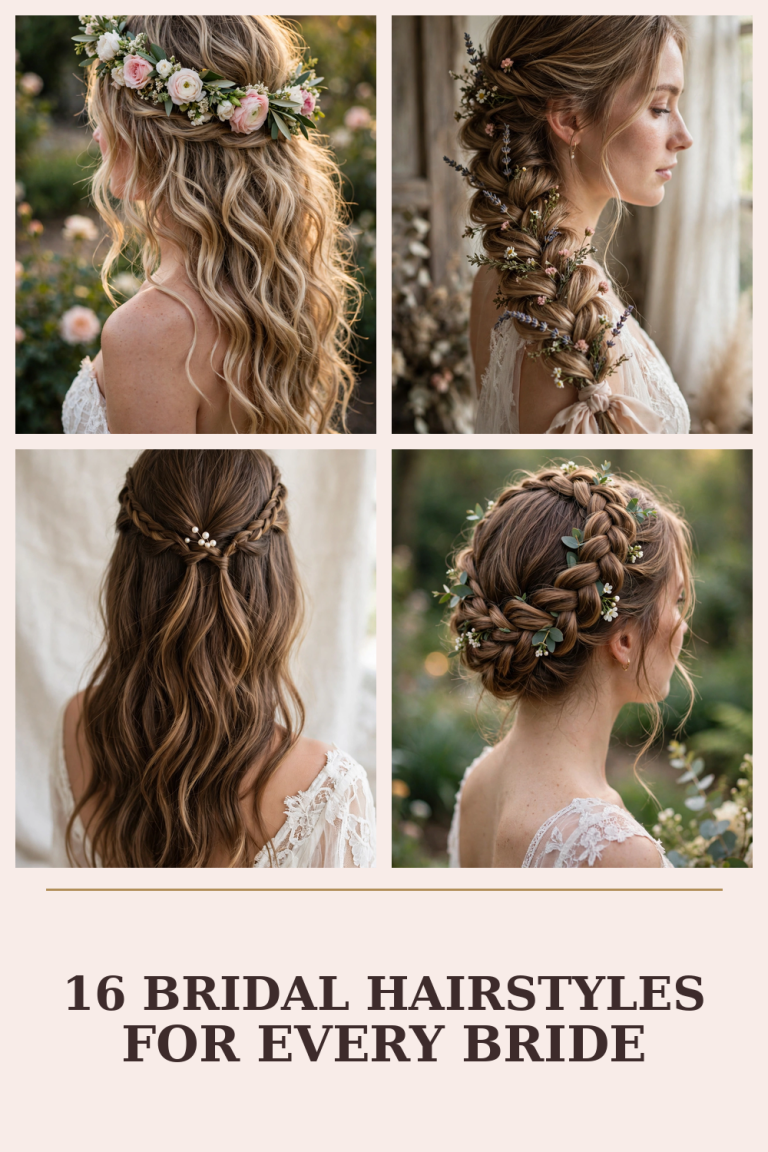
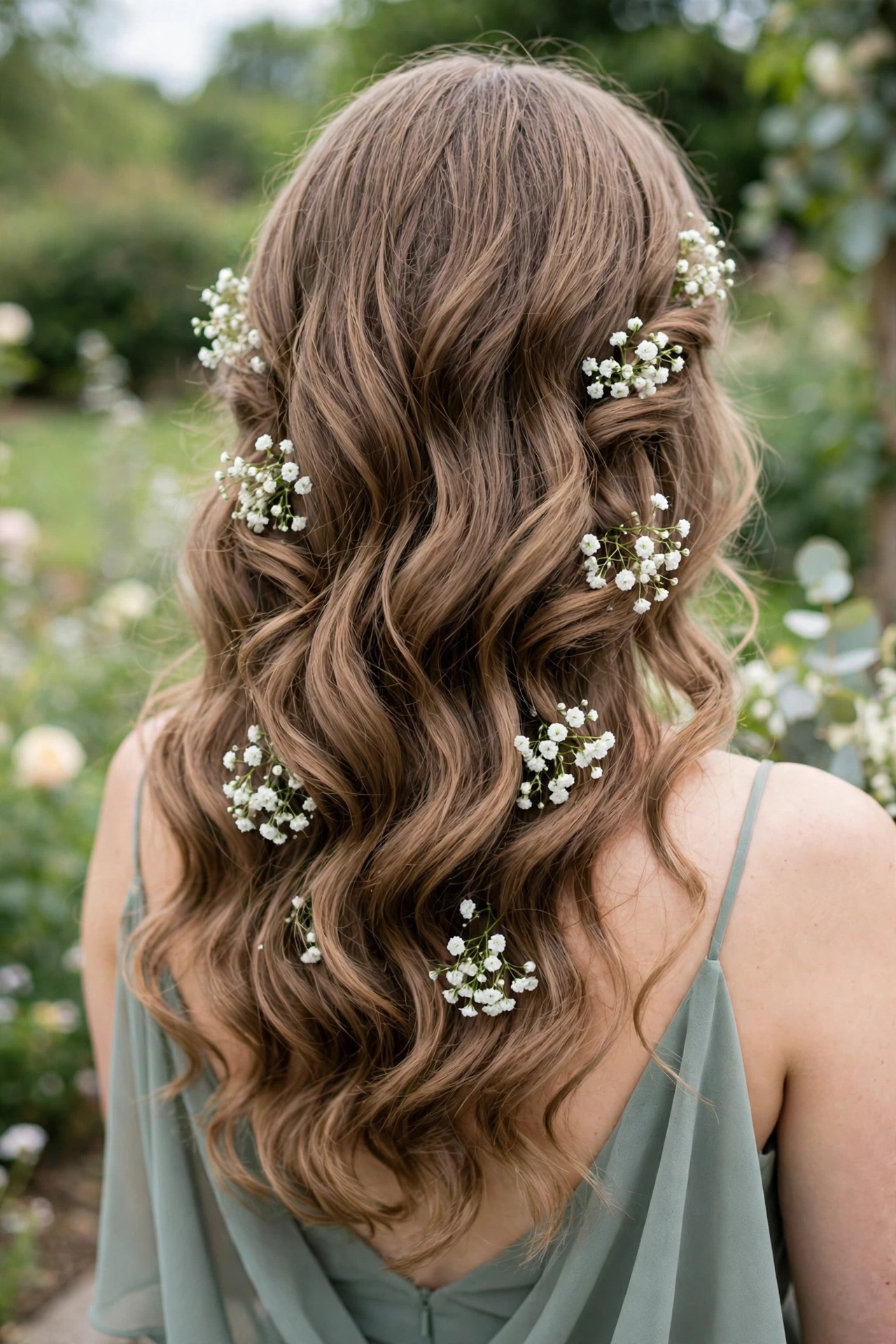
5. Romantic Loose Curls with Fresh Flowers
Soft, touchable curls with small fresh blooms tucked in — the garden-wedding dream.
How to: Curl alternating sections away from the face, cool, and shake out. Have the florist tuck in baby’s breath or small spray roses — baby’s breath is inexpensive and widely available, so coordinating it across the whole party is easy. Secure stems with small bobby pins crossed in an X.
Who it suits: Garden, spring, and outdoor weddings. The flowers do the coordination work, so bridesmaids can each wear their own version of “loose curls.” Ask the florist to add hair flowers when they do boutonnieres — it’s faster than a separate appointment.
Common mistake: Using large, heavy flowers that wilt or drag the curls down. Small blooms only; save the statement pieces for the bouquet.
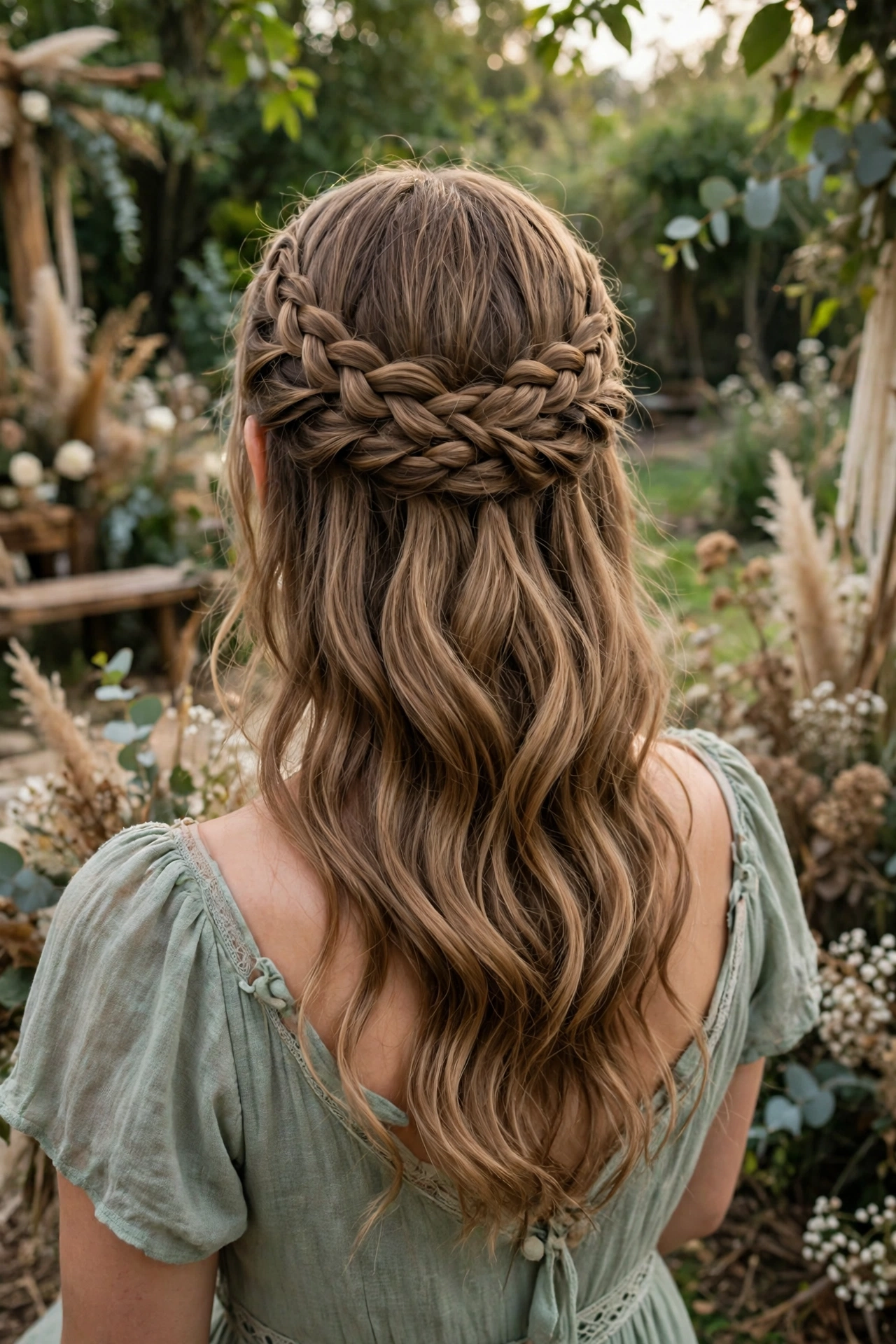
6. Half-Up Crown Braid
A Dutch or French braid swept across the crown with the rest of the hair left in waves — romantic, secure, and endlessly flattering.
How to: Part hair where you like it, then Dutch-braid (underhand, so the braid pops) from one temple across the crown to the other side, pancaking the braid gently for fullness. Pin the end under the loose hair at the back. Curl the remaining hair.
Who it suits: Boho, woodland, festival, and outdoor weddings. Works on medium to long hair; a crystal hair vine woven through the braid (like the ones all over David’s Bridal accessories) turns it into a coordinated group look with zero extra effort.
Common mistake: Braiding too tight against the scalp. Loosen as you go — the softness is the style.
Braided Bridesmaid Styles
Braids are the practical glamour of bridesmaid hair: they lock the style in place for hours, survive wind and dancing, and photograph with gorgeous detail.
7. Classic Braided Crown
A braid wrapped fully around the head like a halo — whimsical, fairy-tale, and rock-solid all day.
How to: Part hair down the middle, Dutch-braid each side from the front hairline, then cross and pin the tails under the opposite braid at the back. Tuck in small flowers or pearl pins along the braid for a finished look.
Who it suits: Boho, garden, and spring weddings. Best on long hair; medium hair can fake it with a braided headband-style section pinned ear to ear. Naturally curly hair holds this beautifully — the texture grips the braid.
Common mistake: Skipping the pancaking step. An un-pancaked crown braid looks thin and severe; gently pulling the braid edges wider is what makes it look lush.
8. Side-Swept Braid
A loose three-strand or fishtail braid draped over one shoulder — romantic, relaxed, and kind to every face shape.
How to: Sweep all hair to one side, braid loosely (fishtail for texture, three-strand for softness), and tie with a ribbon that matches the wedding palette. Pull a few pieces loose around the face.
Who it suits: Outdoor, beach, and destination weddings — it’s wind-proof by design. Universally flattering; the asymmetry is kind to round faces. One of the best DIY options if some bridesmaids are styling themselves.
Common mistake: Braiding from the nape instead of over the shoulder, which pulls the whole look backward and loses the drape.
9. Dutch Fishtail Braid
The statement braid: intricate-looking, surprisingly simple, and incredibly secure.
How to: Work a Dutch fishtail (crossing under instead of over) down the back or to the side. Keep tension even, then pancake aggressively for width. Anchor with a clear elastic and wrap a small strand of hair around it.
Who it suits: Bridesmaids who want their hair to be a moment without an updo. Great for thick hair — the weight actually helps the style hold. Pair with a satin bow or velvet ribbon for fall and winter weddings.
Common mistake: Fishtailing with too-large sections, which makes the braid look chunky and uneven. Small sections, even tension.
Ponytails & Modern Looks
Ponytails have grown up. Done right, they’re chic, contemporary, and comfortable — and they keep hair off the face through dinner and dancing.
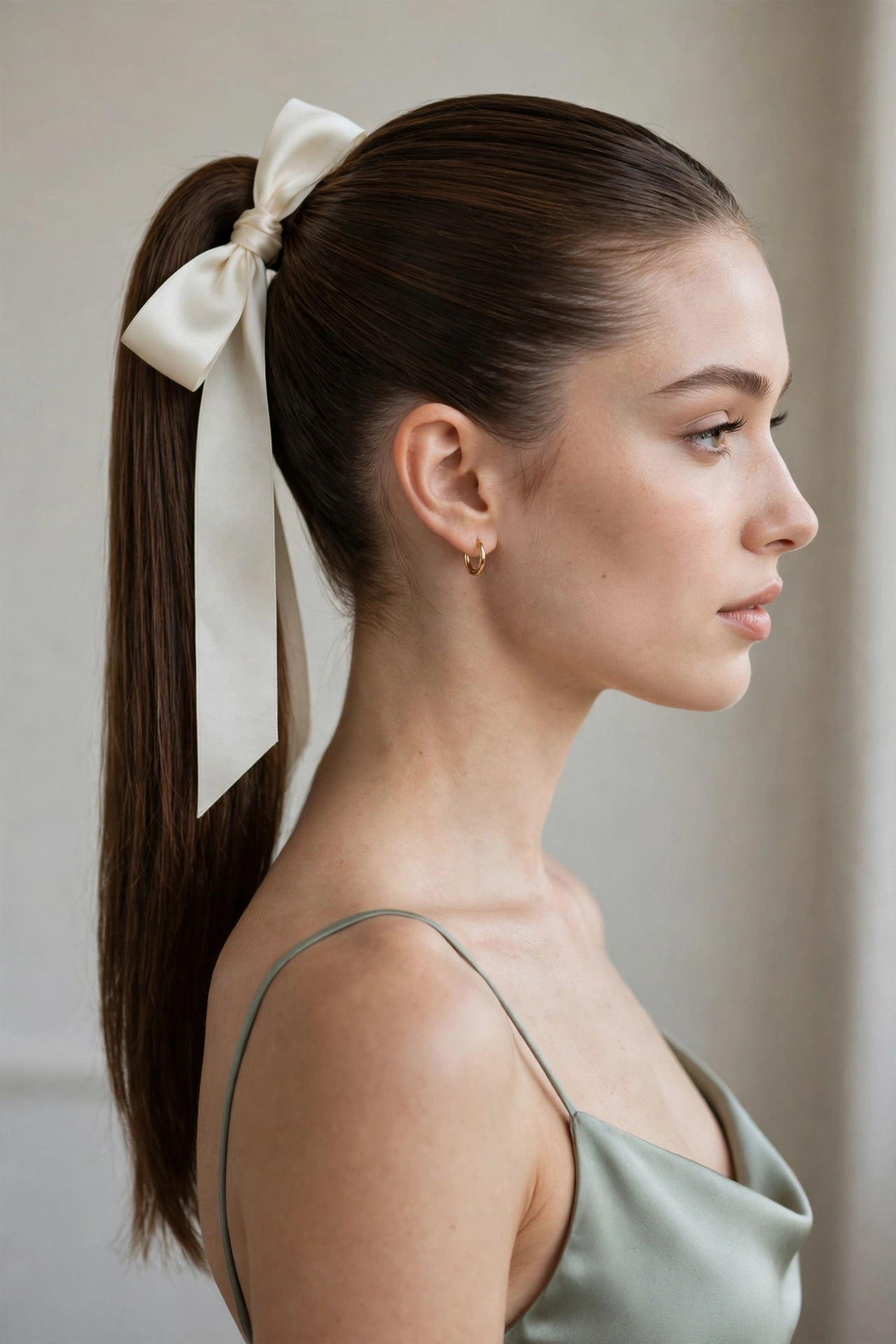
10. Sleek Low Ponytail with Ribbon
Polished, minimal, and quietly luxurious — a smooth low pony tied with a silk ribbon in the wedding colors.
How to: Blow out smooth, flat-iron the lengths, and secure low at the nape with a strong elastic. Wrap a half-inch section of hair around the elastic and pin underneath. Tie a silk or grosgrain ribbon in a bow over the wrap — black velvet for winter, blush silk for spring.
Who it suits: Modern, minimalist, and city weddings. Stunning on oval and heart-shaped faces. A godsend for bridesmaids who hate the feeling of pinned-up hair — this stays comfortable all day.
Common mistake: A visible elastic. The hair-wrap step takes thirty seconds and is the difference between “casual ponytail” and “wedding ponytail.”
11. High Voluminous Ponytail
Red-carpet energy: height at the crown, smooth sides, and a full, bouncy tail.
How to: Tease the crown lightly, smooth the top layer over, and secure high. Curl the tail in sections, then backcomb the underside of the tail for volume. A strong-hold spray (Got2b Glued Blasting Freeze, ~$7 at Ulta) on the base keeps it lifted.
Who it suits: Modern and summer weddings, fashion-forward brides. Elongates round faces beautifully. Not ideal for very heavy hair unless the elastic is seriously strong — weight will drag it down by dinner.
Common mistake: Placing it too far back, which reads dated. The sweet spot is high and slightly forward, at the crown’s peak.
12. Bubble Ponytail
The playful-modern pick: a ponytail divided into “bubbles” with evenly spaced elastics, each section gently pulled wide.
How to: Secure a ponytail, add elastics every 2-3 inches down the tail, and tug each section outward to form bubbles. Hide elastics with tiny ribbon wraps or metallic cuffs.
Who it suits: Contemporary, garden-party, and daytime weddings. Fantastic on long hair; works on medium hair with extensions. One of the easiest styles for a bridesmaid to DIY.
Common mistake: Uneven spacing. Measure roughly — the bubbles should graduate slightly smaller toward the end.
13. High Bun / Top Knot
Clean, lifted, and confident — a polished bun that opens up the neckline for statement earrings.
How to: Pull into a high ponytail, twist the tail, and wrap around the base. For fine hair, use a donut form for fullness. Smooth flyaways with a toothbrush spritzed with hairspray.
Who it suits: Bridesmaids with great bone structure and statement jewelry. Works for formal and modern weddings alike. For very short hair, this is the one style that needs length — see our short-hair bridesmaids guide for the best alternatives.
14. Sleek Straight with a Deep Side Part
Understated and striking: glassy-straight hair with a dramatic side part. Proof that “down” can be a wedding style.
Who it suits: Minimalist and urban weddings, bridesmaids with naturally straight or straightened hair. Pair with a single statement barrette or crystal clip on the tucked side.
Common mistake: Skipping heat protectant and anti-frizz serum — sleek styles show every bit of damage and frizz. A pea-sized amount of serum (Kristin Ess Weightless Shine, ~$15 at Ulta) on the ends makes all the difference.
Bridesmaid Hairstyles by Hair Length
Long hair can wear anything on this list — the only real consideration is weight. Heavy hair pulls styles down over ten hours, so lean toward low, anchored styles (chignons, low ponytails, braids) rather than high buns unless the elastic and pinning are serious.
Medium hair (shoulder to collarbone) is the most versatile length. Half-up styles, textured buns, low chignons, and loose curls all work beautifully. A low bun may need a small donut form for fullness — nobody will know.
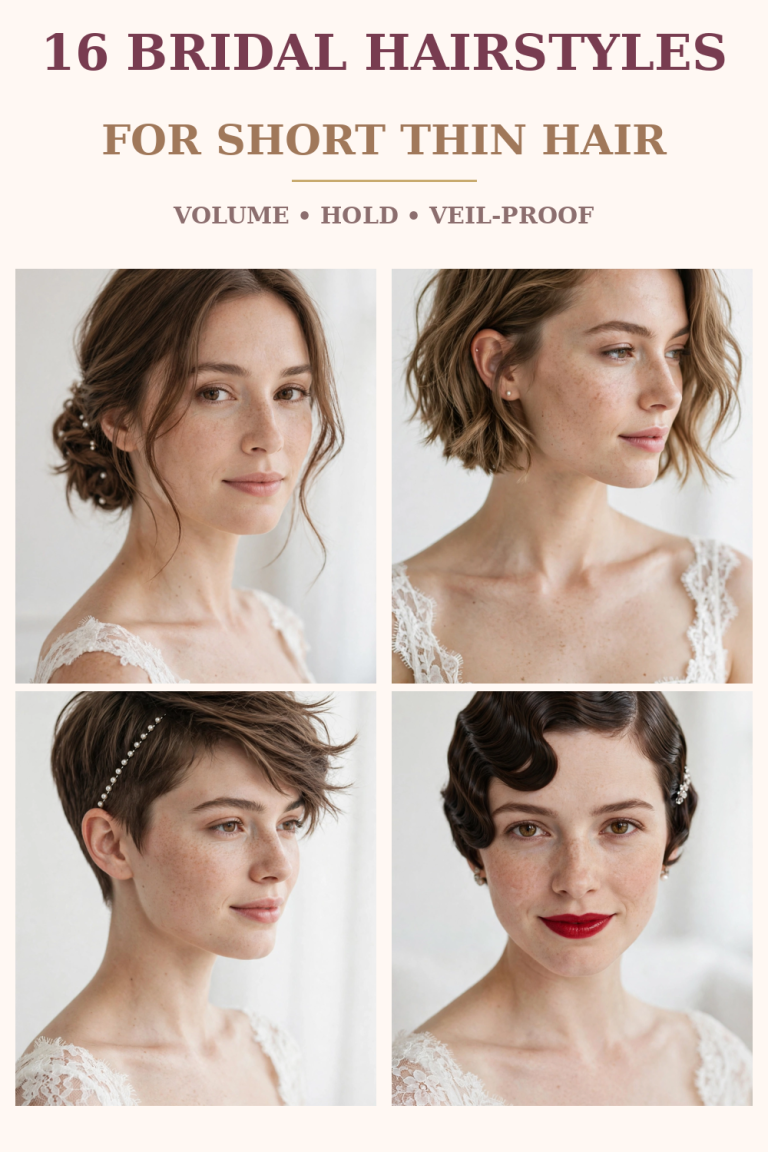
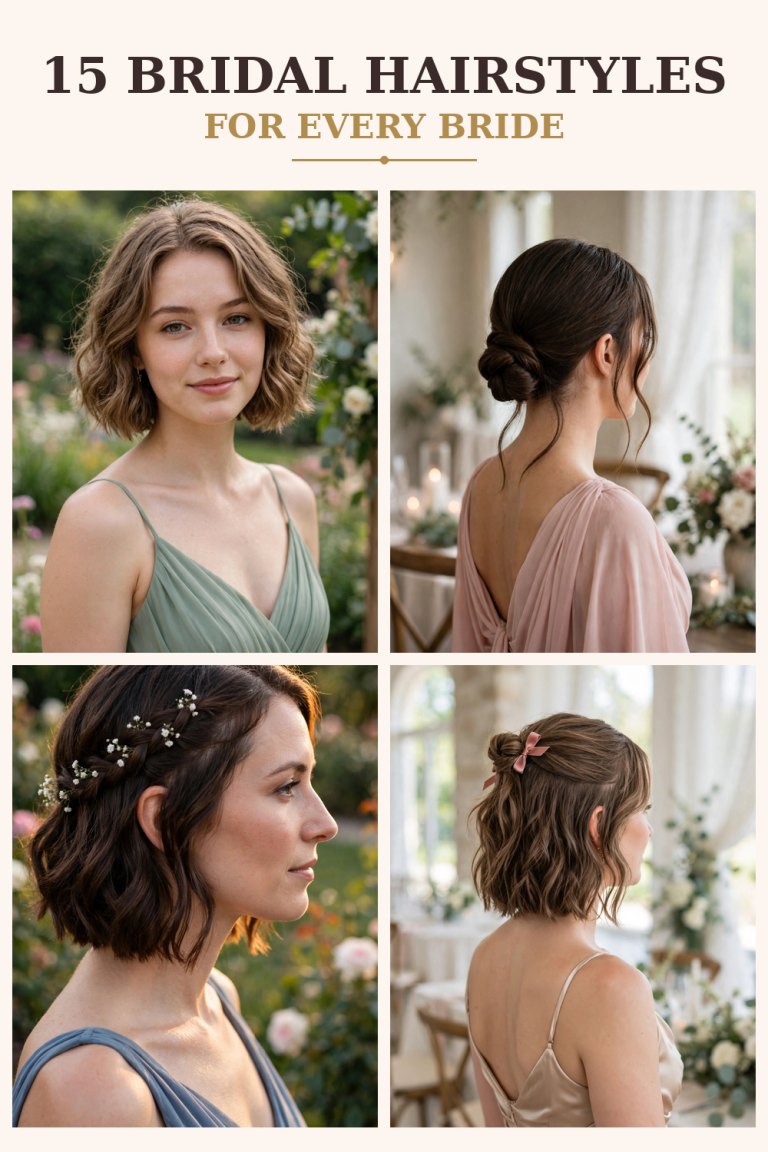
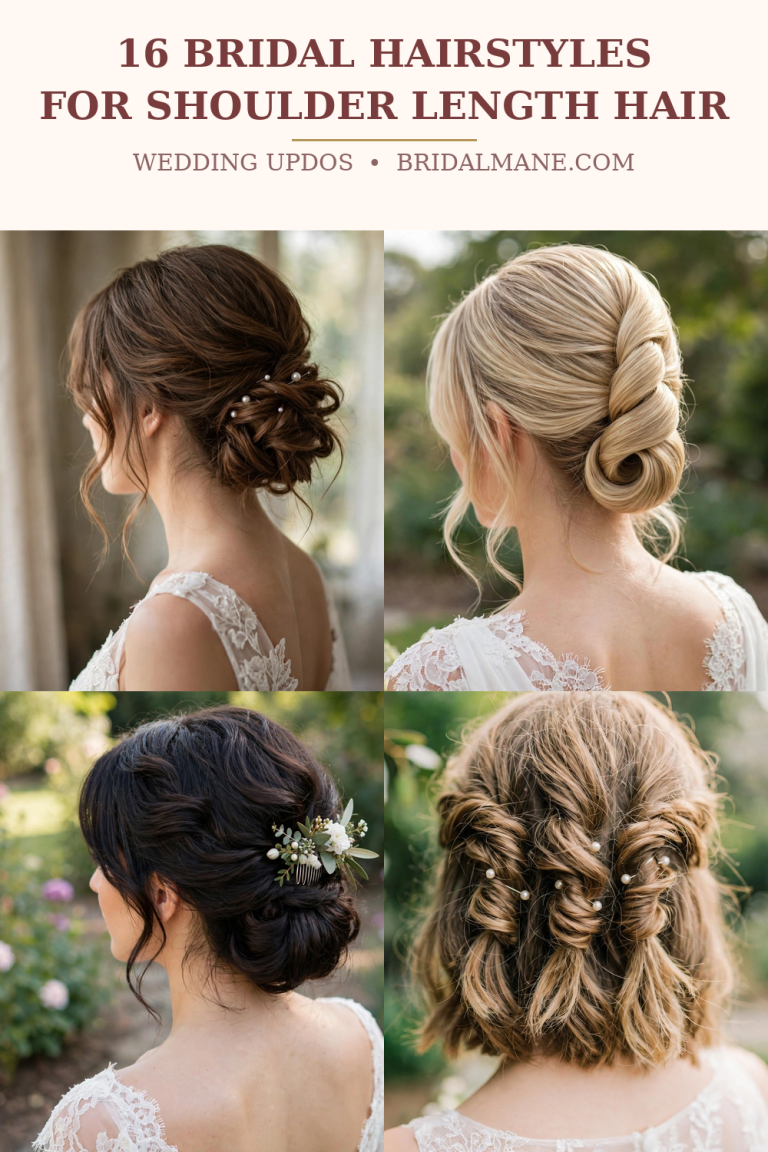
Short hair has more options than people assume: soft waves, sleek bobs, textured pixie styling, half-up styles with a decorative clip, and embellished headbands all look intentional and beautiful. Floral crowns and hair vines are surprisingly forgiving on shorter lengths because the accessory carries the look. Our dedicated guide to easy wedding hair for bridesmaids with short hair walks through every option in detail — the short-haired bridesmaid in the party deserves her own playbook, not an afterthought.
Bridesmaid Hairstyles by Hair Texture
Fine or thin hair: Texture is everything. Pre-curl before updos, use a thickening spray (Bumble and bumble Thickening Dryspun Texture Spray, ~$36 at Sephora), and don’t be shy about a donut form or clip-in extensions — even one weft at the back transforms an updo. Avoid heavy, sleek styles that show scalp.
Thick hair: Distribute weight low — low chignons and braids beat high buns for comfort. Section the hair and pin in stages rather than trying to wrestle it all at once. A strong elastic (not the thin drugstore kind) is non-negotiable.
Curly hair: Work with the curl, not against it. Half-up styles with a crystal vine, pineapple updos, and braided crowns all look stunning on natural curl patterns — and the texture grips pins better than straight hair does. Diffuse fully before styling; damp roots will collapse any style by afternoon.
Natural and 4C hair: Sleek low buns, twisted updos, twist-outs pinned up, and braided styles are all gorgeous and protective. Book a stylist experienced with natural hair specifically — not every wedding stylist is, and it’s worth asking directly. Silk or satin scrunchies protect edges during the long day. If anyone in the party wears a protective style already, it can absolutely be the wedding style with the right accessories.
Face Shapes: Quick Matching Notes
– Round faces: Height and asymmetry flatter most — high ponytails, side-swept braids, and styles with crown volume. Avoid center-parted sleek styles that widen the face. – Oval faces: The lucky ones — nearly everything works. This is the face shape that can carry the sleekest, simplest styles. – Heart-shaped faces: Side parts, face-framing tendrils, and low, soft styles balance a wider forehead. Avoid too much volume at the crown. – Square faces: Softness is key — waves, textured buns, and curved lines soften strong jawlines. Skip severe center parts and slicked-back looks. – Long faces: Width at the sides helps — loose curls, side-swept styles, and low buns. Very high buns can elongate further.
Venue & Weather: Choosing for the Setting
Beach and destination weddings: Wind and humidity are the whole game. Braided updos, low buns, and secure ponytails win; loose, freshly-curled hair is a gamble. If anyone insists on down, a strong anti-humidity spray (Living Proof No Frizz, ~$32 at Sephora) is mandatory. More beach-proof ideas live in our beach wedding hairstyles guide.
Garden weddings: Anything goes, but flowers in the hair feel made for this setting. Baby’s breath, small roses, and greenery crowns all shine outdoors.
Church and formal venues: Lean classic — chignons, French twists, polished waves. These settings reward timeless over trendy.
Barn and rustic weddings: Textured, touchable styles — loose braids, messy buns, half-up waves. Perfection looks out of place here; lived-in looks right.
Summer weddings: Humidity-proof everything. Updos and braids over loose curls; anti-frizz products; consider the ceremony time — a 2 PM outdoor ceremony in August is the ultimate stress test.
Winter weddings: Static is the enemy. A light leave-in conditioner before styling, and velvet ribbons, crystal accessories, and sleek finishes all suit the season. Indoor heating dries hair out, so ends need serum.
Match the Style to the Theme and Neckline
| Wedding theme | Best bridesmaid styles |
|---|---|
| Classic / traditional | Low chignon, French twist, soft Hollywood waves |
| Boho / festival | Braided crown, side-swept braid, loose curls with flowers — see our boho wedding hairstyles guide |
| Modern / minimalist | Sleek ponytail, straight with side part, polished low bun |
| Rustic / barn | Textured low bun, fishtail braid, half-up waves |
| Beach / destination | Braided updo, low pony, wind-proof half-up |
| Black-tie / formal | Chignon, French twist, glam waves |
Dress necklines: High neck and halter dresses pair best with updos (showing the neckline is the point). Strapless, sweetheart, and off-the-shoulder dresses love waves and side-swept styles. One-shoulder dresses balance beautifully with an asymmetric style on the opposite side. V-necks are the most forgiving — almost anything works.
Hair Accessories: The Coordination Shortcut
When the party’s hair lengths and textures vary wildly, a shared accessory is the fastest path to a cohesive look:
– Pearl pins — classic, inexpensive, work in updos and half-up styles alike. A set of 20-30 pins costs under $10 and covers the whole party. – Crystal hair vines — the most versatile shared accessory: they weave through braids, crowns, buns, and half-up curls on every hair type without requiring the same technique. – Fresh flowers — baby’s breath and small spray roses tuck into almost any style. Coordinate through the florist. – Floral crowns — gorgeous, but mind the hierarchy: the bride’s crown should be fuller, the party’s smaller, or the photos flatten the visual distinction between bride and bridesmaids. – Headbands — thin metallic or pearl headbands polish updos instantly and adapt to nearly any style, making them a great coordinated choice for mixed hair types. – Ribbons and bows — satin bows on ponytails, velvet ribbon woven into braids. Match the wedding palette for instant coordination.
One rule: one statement accessory per person. A crystal vine and a tiara and pearl pins reads cluttered in photos. Pick one hero piece.
DIY vs. Salon: What’s Realistic?
Book a professional when: the wedding is formal, the style is complex (intricate braided updos, Hollywood waves that must last 10 hours), anyone has difficult hair, or the morning timeline is tight. A pro brings the right products, an extra set of hands, and — critically — accountability if something goes wrong.
DIY works when: the style is genuinely simple (sleek ponytail, bubble ponytail, side braid, loose waves on cooperative hair), the wedding is casual, and the bridesmaid has practiced. Practice is non-negotiable — do a full trial run at home, photograph it in daylight, and wear it for six hours to test the hold.
The hybrid: many parties book a stylist for the complex styles and let confident DIYers handle simple ones. This is completely normal — just make sure the DIY looks get a trial too.
The Planning Timeline: Trials, Who Pays, and the Day-Of Schedule
How far in advance: Finalize hairstyle choices 1-2 months before the wedding. Book hair trials 4-8 weeks out (about $50-150 per trial depending on the stylist and city). If anyone is cutting or coloring their hair for the wedding, start that conversation 3-6 months ahead so there’s time to adjust.
Should bridesmaids get a trial? Not always necessary, but smart for anyone with difficult hair, anyone trying a dramatically new style, or when the bride wants a specific coordinated look. Bring inspiration photos, the actual accessories, and a photo of the dress to the trial — context changes everything.
Who pays? The etiquette is clear: if the bride requires professional styling, the bride (or her family) pays. If a bridesmaid requests extras beyond what’s asked — her own trial, a fancier style — she covers the difference herself. Whatever the arrangement, communicate it early and in writing. Money surprises destroy friendships faster than bad hair ever could.
Day-of timeline: Budget 30-45 minutes per bridesmaid for hair (up to an hour for complex updos or very long hair), plus 30 minutes each for makeup. Work backward from the ceremony: for a party of five with one stylist, that’s roughly four hours. One stylist per six people keeps things on track; for large parties or early ceremonies, ask the beauty team to bring an assistant. Schedule the bride in the middle of the order so she’s fresh for pre-ceremony photos but not sitting in curls for hours. Every bridesmaid should arrive with clean, dry, day-old hair (second-day hair holds styles better — wash the night before, not the morning of).
The All-Day Hold System
Every style in this guide lasts from ceremony to last dance if you follow the same five-step system:
1. Start with texture. Day-old hair, a texturizing spray, or light mousse. Freshly washed, slippery hair is the number one cause of styles collapsing.
2. Build in layers. Pin as you go rather than pinning everything at the end. Each section should be secure on its own.
3. Use quality pins. Cheap bobby pins slide out; good ones (with the rubberized tips intact) grip. Cross pins in X shapes at stress points.
4. Layer your hold. A flexible spray during styling, then a strong-hold finisher (L’Oréal Elnett Satin, ~$16 at Ulta) at the end. Two light layers beat one heavy shell.
5. Weatherproof. Outdoor or humid wedding? An anti-humidity spray as the final step, and avoid touching the style — hands transfer oil and break the hold.
The clutch kit every bridesmaid should carry: 6-10 bobby pins matching her hair color, a travel hairspray, blotting papers, lipstick, a few tissues, and one spare hair tie. Assign one bridesmaid as the kit-keeper so it doesn’t get left in the bridal suite.
Etiquette: Don’t Upstage the Bride (and Other Party Roles)
The unwritten rule of bridesmaid hair: you should look beautiful, not bridal. If the bride is wearing an elaborate updo with a veil, the party in equally elaborate updos with tiaras blurs the line in photos. When in doubt, choose the slightly simpler version — and ask the bride what she’s wearing before finalizing.
Maid of honor: Traditionally one small step elevated — the same style family as the party, perhaps with a slightly nicer accessory or a touch more detail. Distinct, not different.
Junior bridesmaids: Keep it age-appropriate and comfortable. Simple half-up styles, loose braids, or a small floral crown. Nothing that requires sitting still for an hour or feels too “grown-up.”
Flower girls: Brief note — their styles should echo the party in miniature (a tiny braid, a small crown, loose curls with a bow). Coordinate, don’t replicate.
Cultural notes: For South Asian weddings, bridesmaids often wear gajra (jasmine strands) woven into braids or buns — plan the base style to accommodate them, and check that maang tikka or matha patti placements work with the chosen updo. Dupatta draping also affects the back of the style, so do the trial wearing it. Similar planning applies to any cultural hair adornment: choose the style around the adornment, not the other way around.
Pro Tips
– Photograph the trial in daylight. Salon lighting lies. What looks perfect under fluorescents can look flat in outdoor photos. – The back matters most. The bridal party is photographed from behind during the entire ceremony. Check every style from the back before approving it. – Neckline test: put the dress on (or a similar neckline) at the trial. Hair + dress + jewelry is one composition, not three separate decisions. – Comfort check: wear the trial style for at least four hours. A style that gives you a headache at hour three is a failed style. – Assign a hair captain. One bridesmaid keeps the timeline, the clutch kit, and the stylist’s number. The bride should not be managing hair logistics on her wedding day. – Have a weather plan B. If the forecast turns, know which styles survive: braids and buns over loose waves, always. – Don’t wash the morning of. Second-day hair holds better — this single tip fixes more collapsing styles than any product.
Frequently Asked Questions
Should all bridesmaids have the same hairstyle? No — and forcing it usually backfires on mixed hair types. The modern approach is coordinated, not identical: agree on a style category (all up, all half-up, all down) or a shared accessory, and let each bridesmaid wear the version that flatters her face shape and hair texture. The group reads cohesive in photos because of the shared direction, not matching techniques.
How far in advance should bridesmaids decide on hairstyles? Finalize choices 1-2 months before the wedding, and book any hair trials 4-8 weeks out. If someone is cutting or coloring their hair for the wedding, start planning 3-6 months ahead.
Who pays for bridesmaid hair? If the bride requires professional styling, the bride or her family traditionally pays. If a bridesmaid wants extras beyond what’s asked — her own trial or an upgraded style — she covers that herself. Communicate the arrangement early to avoid awkwardness.
How do I make my bridesmaid hairstyle last all day? Start with day-old hair (it holds better than freshly washed), build the style in pinned layers, use quality bobby pins crossed in X shapes at stress points, layer a flexible spray during styling with a strong-hold finisher, and finish with anti-humidity spray for outdoor weddings. Carry a clutch kit with spare pins and travel hairspray.
What bridesmaid hairstyles work best for outdoor weddings? Braided updos, low chignons, textured buns, and secure ponytails — anything anchored close to the head survives wind and humidity. Avoid freshly-set loose curls for outdoor summer ceremonies; if you want hair down, choose styles with at least a half-up anchor.
Can bridesmaids wear their hair down? Absolutely. Soft waves, polished straight styles, and side-swept curls all look elegant — they’re best for indoor ceremonies or mild weather, and they pair beautifully with strapless and off-the-shoulder dresses. For extra security, add a half-up section or a statement clip.
What are the best bridesmaid hairstyles for short hair? Short hair has great options: soft waves, sleek bobs, textured pixie styling, half-up styles with a decorative clip, and embellished headbands. The key is leaning into texture and letting one good accessory carry the look. See our full guide: easy wedding hair for bridesmaids with short hair.
Should bridesmaids get a hair trial? It’s not required, but it’s wise for anyone with difficult hair, anyone trying a new style, or when the bride wants a specific coordinated look. Expect $50-150 per trial. Bring inspiration photos, your actual accessories, and a dress photo.
What’s the difference between bridesmaid and bridal hairstyles? Bridal styles are typically more intricate and designed to stand out — often built around a veil or statement accessory. Bridesmaid styles complement the bride’s look without competing with it. The golden rule: you should look beautiful, not bridal.
Which hairstyles suit different dress necklines? Updos flatter high-neck and halter dresses by showing off the neckline detail. Loose waves and side-swept styles suit strapless, sweetheart, and off-the-shoulder gowns. One-shoulder dresses pair well with asymmetric styles worn on the opposite side.
Can bridesmaids mix updos and down hairstyles? Yes — mixing is a popular modern approach, as long as there’s a unifying element: matching accessories, similar texture, or a consistent level of formality. A shared crystal vine or the same pearl pins across different styles looks intentional and gorgeous.
The Bottom Line
The best bridesmaid hairstyle is the one that makes each woman feel like the best version of herself while the whole party reads as one beautiful, intentional group. Pick a direction, not a dictate. Plan the timeline, sort out who’s paying early, prep for the weather, and pack the clutch kit. Do that, and the hair is one thing nobody will have to think about on the wedding day — which is exactly the point.
Looking for more wedding-party inspiration? Browse our wedding guest hairstyles for attendee looks, our half-up half-down wedding hairstyles for the most versatile style family of all, and our curly wedding hairstyles if anyone in the party is working with gorgeous natural texture.