14 Simple Wedding Dresses for Short Brides (2026)
Shopping for a wedding dress when you’re 5’4″ or under can feel discouraging. Standard gowns are cut for brides who are 5’7″ to 5’9″, so the waist seam hits below your natural waist, the flare point of a mermaid sits at your calves, and the hem pools around your shoes. But here’s the truth: a simple dress is the best friend of a short bride. Clean lines, minimal embellishment, and the right proportions create one unbroken vertical line — and that makes you look taller, not smaller.
This guide gives you 14 simple wedding dresses for short brides, each with detailed fit notes for petite frames, plus a complete shopping and alteration playbook, petite plus-size advice, and answers to the questions short brides ask most.
The 5 Golden Rules for Short Brides Choosing a Simple Dress
1. Vertical lines win. V-necks, princess seams, a center back button line, and vertical lace appliqué all draw the eye up and down. Avoid wide horizontal ruffles, dropped waists, and thick contrast sashes — they cut you in half visually. 2. Define one waist, and make it high. A waistline at or slightly above your natural waist makes your legs look longer. Empire waists do this instantly; for A-lines, keep the waist seam at your true waist. 3. Light fabrics over heavy ones. Crepe, charmeuse satin, chiffon, and single-layer tulle move with a petite frame. Heavy duchess satin and multi-layer ball gown skirts can swallow a short bride. 4. Hem is everything. Floor-length is absolutely fine for short brides — but the hem must be hemmed so it grazes the floor about 1 inch above your shoes. Tea-length, midi, and mini skips the big alteration entirely. 5. Order for your body, alter for your height. Give your salon your hollow-to-floor measurement (center collarbone to floor, barefoot). If ordering online, that single number saves you the most expensive alteration work.
14 Simple Wedding Dress Ideas for Short Brides
### 1. The Simple Satin Slip Dress
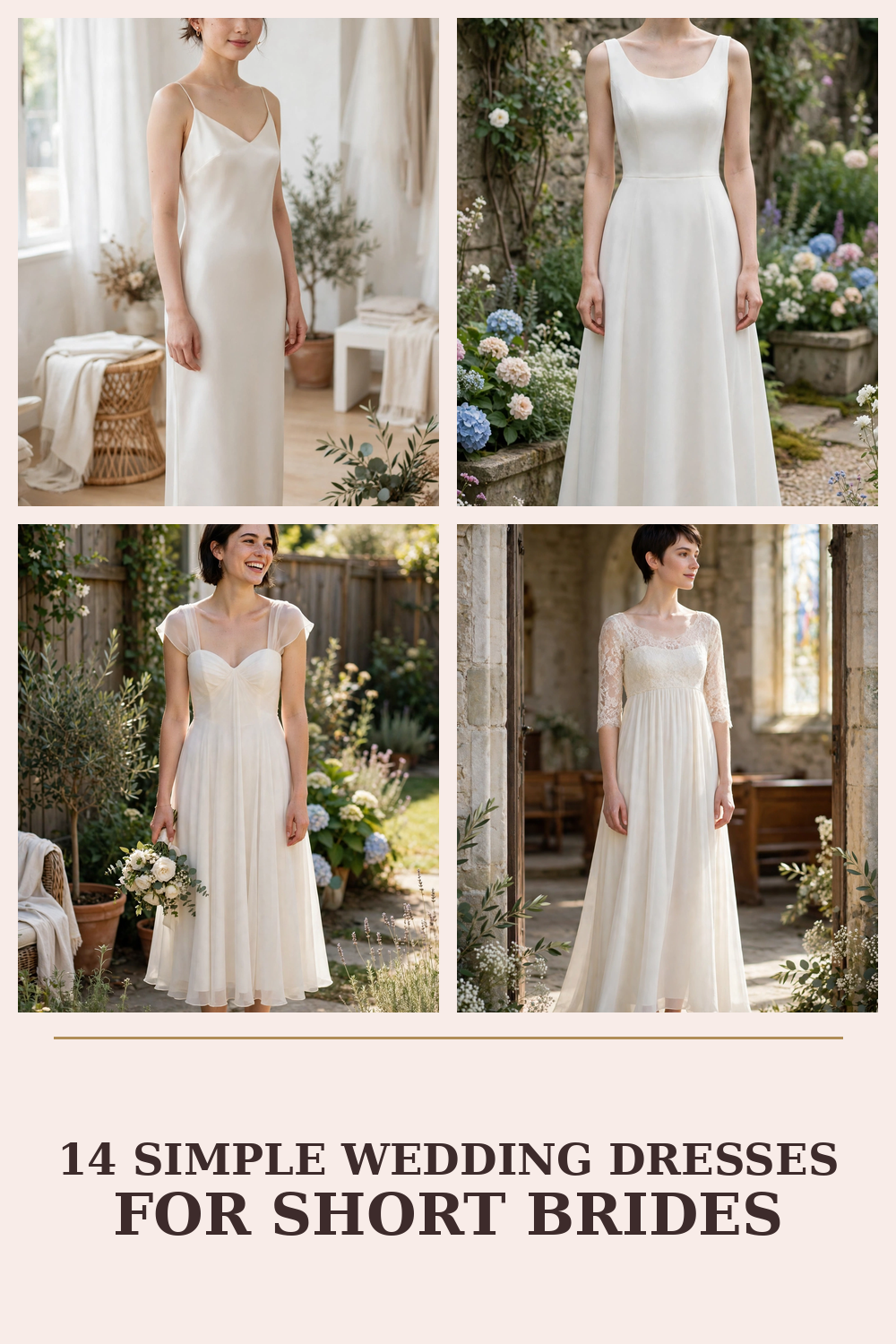
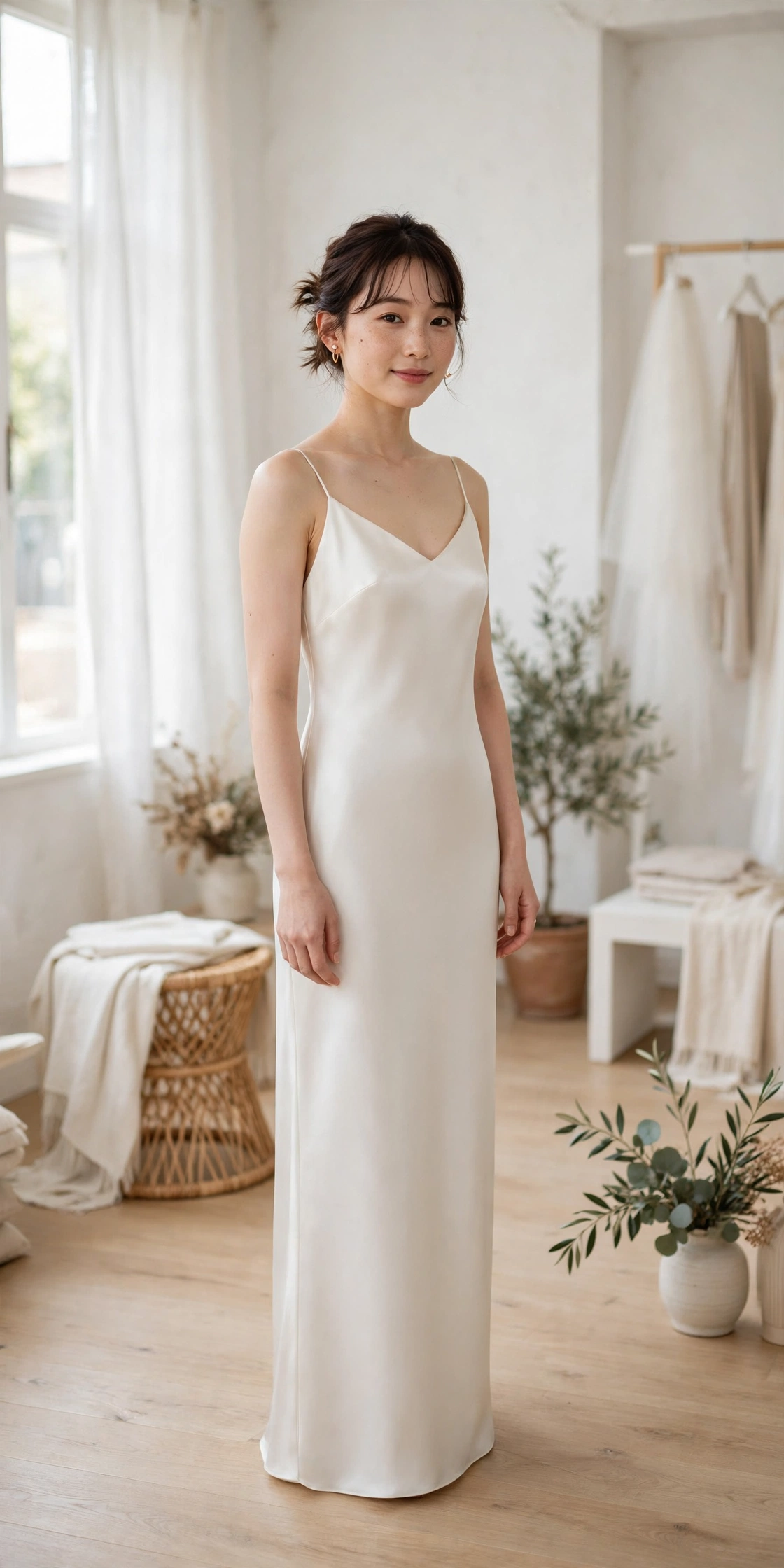
The minimalist slip is arguably the most flattering simple wedding dress for a short bride. Bias-cut or cleanly seamed satin falls in one uninterrupted line from shoulder to hem, which is exactly the elongation effect petite frames need. A V-neckline opens the neck and chest area; thin spaghetti straps don’t cut the shoulder line the way wide straps do.
Fit notes for short brides: Order a true petite length if the designer offers it, otherwise plan a simple straight hem ($80–$150). Keep the hem at floor-grazing — no break at the front. The slip shows everything, so wear seamless smoothing shorts or a slip with built-in cups.
Best for: Slim to athletic frames, courthouse and modern minimalist weddings, summer ceremonies. Budget: Simple slips are some of the most affordable wedding dresses — expect $150–$600 from Lulus, Etsy designers, and off-the-rack boutiques.
### 2. Simple Crepe A-Line with Scoop Neckline
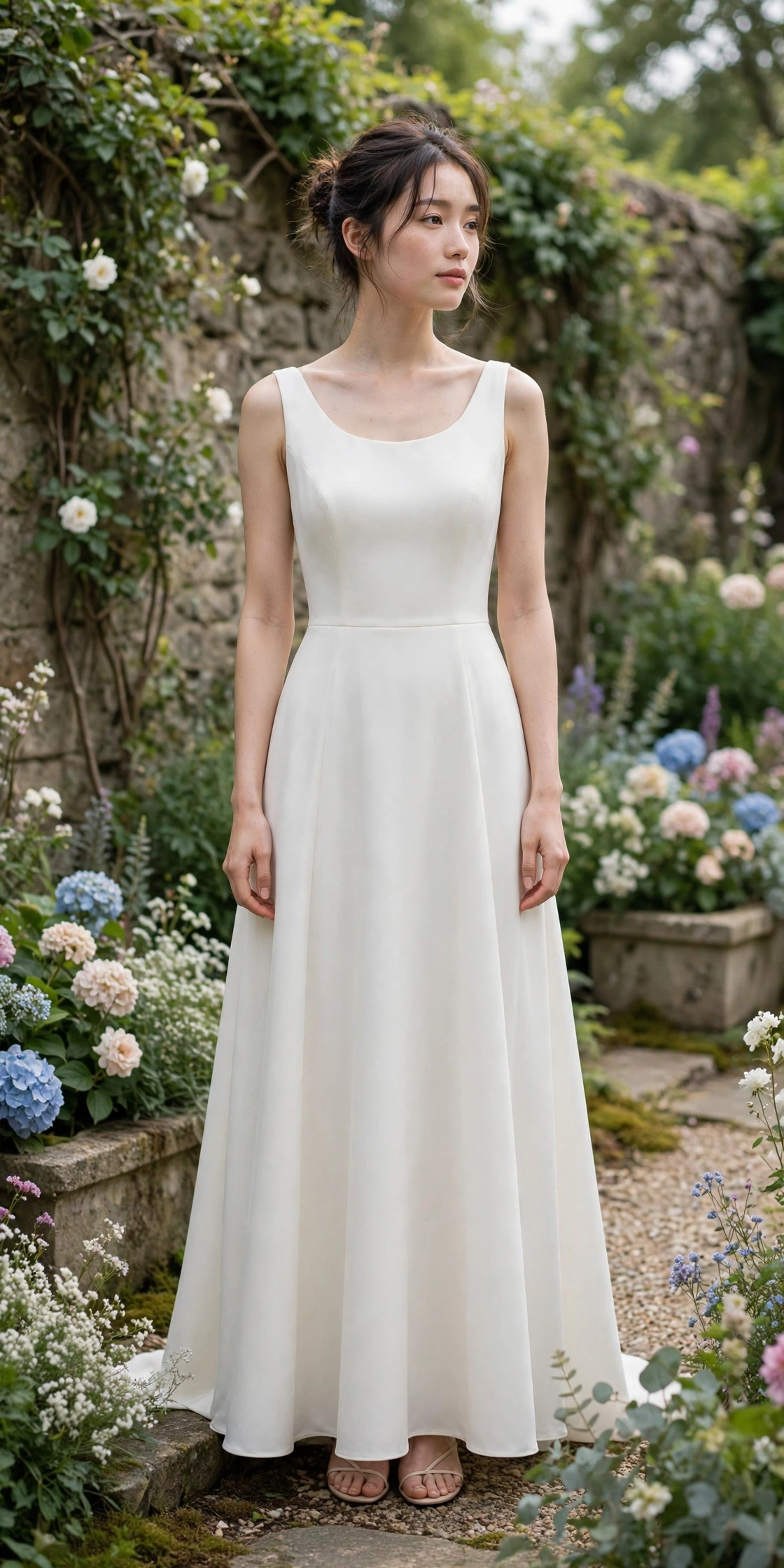
The A-line is the most reliable silhouette for short brides, and a clean crepe version with a scoop neckline is as simple as it gets. The fitted bodice through the waist defines your narrowest point; the skirt skims outward in a gentle, unbroken line to the floor. No beading, no lace, no fuss — the fabric does all the work.
Fit notes for short brides: Make sure the waist seam sits at your natural waist, not below it — standard bodices can run long on petite torsos. A seamstress can shorten a bodice, but it’s easier to buy a dress with a high or empire-placed waist seam from the start. Matte crepe photographs beautifully and never looks cheap.
Best for: Almost every body type; church, garden, and ballroom weddings. Budget: $400–$1,200 at David’s Bridal, BHLDN, and Azazie (custom sizing with hollow-to-floor included).
### 3. Simple Tea-Length Chiffon Dress
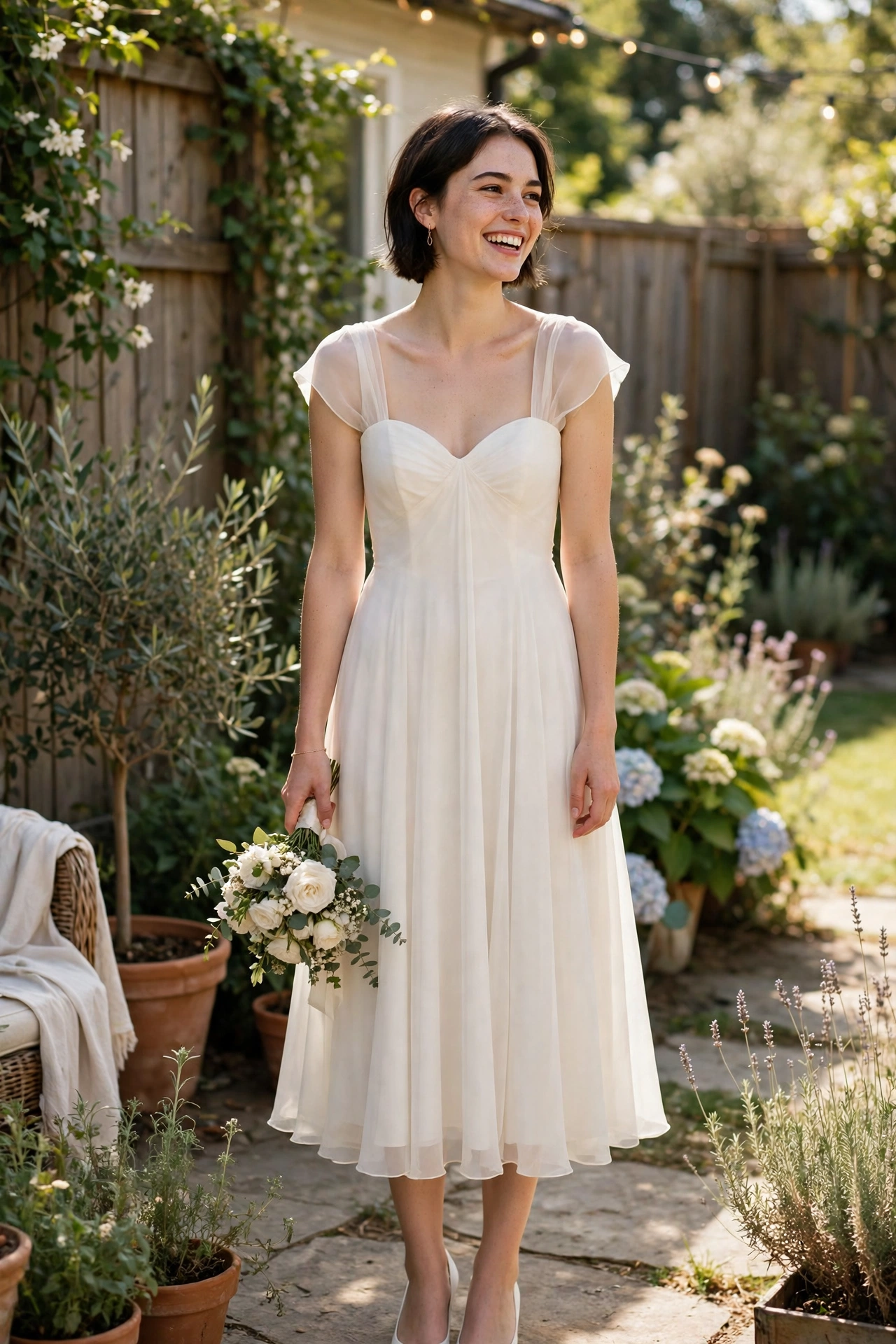
Tea-length (mid-calf) is a secret weapon for short brides: no hem alteration at all, and the visible leg below the hem reads as extra height. A simple chiffon tea-length dress with a sweetheart or scoop neckline and flutter or cap sleeves is romantic, light, and perfect for garden, backyard, or summer weddings.
Fit notes for short brides: The hem should hit at the slimmest part of your calf — roughly 2–3 inches below the knee on most petite brides. Too long and it cuts the leg awkwardly; too short and it loses the tea-length elegance. Cap sleeves add charm without the width of puffed sleeves, which can overwhelm small frames.
Best for: Backyard, garden, daytime, and semi-formal weddings; brides who want to dance freely. Budget: $200–$700; Etsy and Lulus have excellent simple chiffon tea-length options.
### 4. Simple Empire-Waist Lace Dress
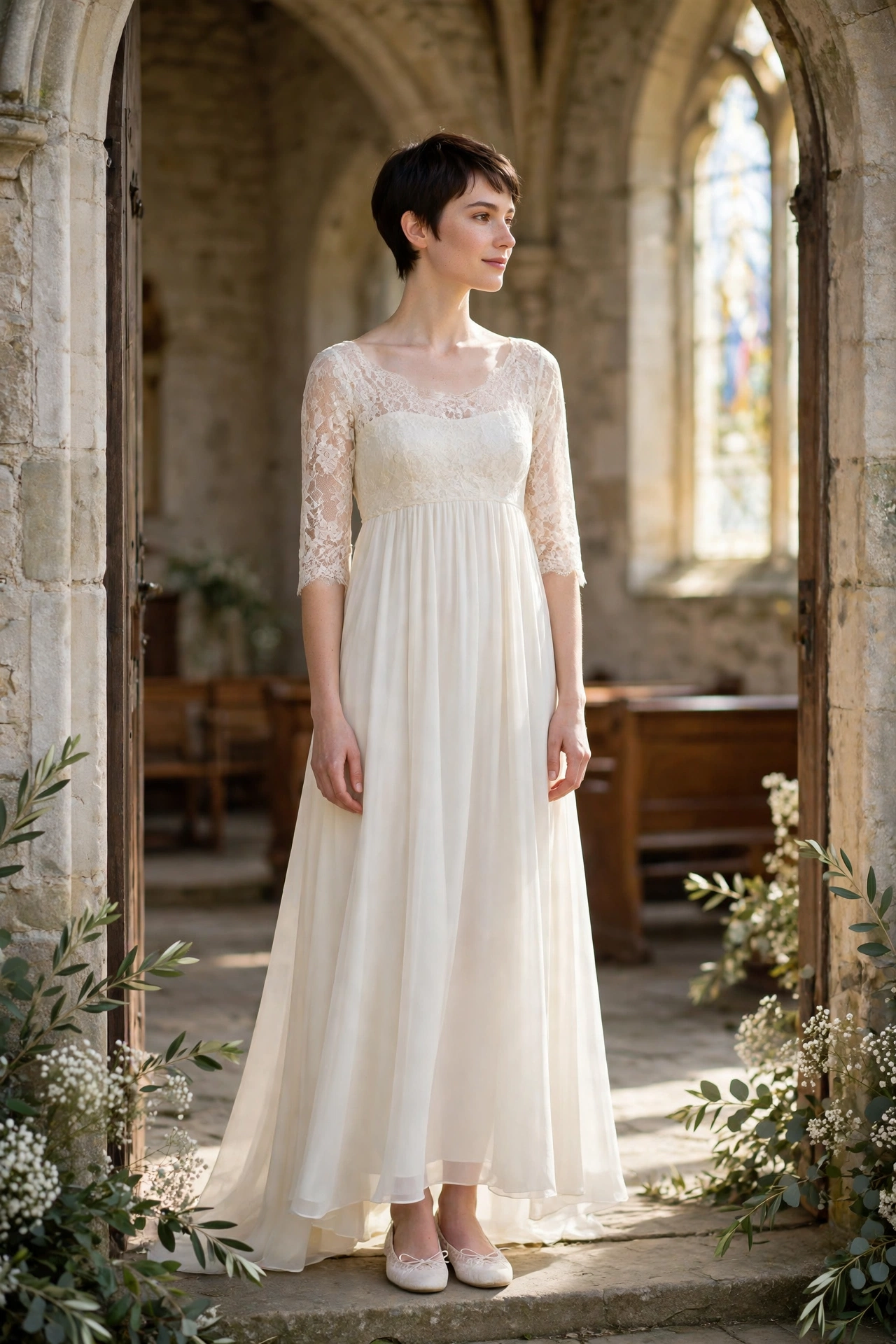
An empire waist sits just below the bust, which instantly raises your visual midpoint and makes your legs look longer — a huge win for brides under 5’4″. A simple version with a delicate lace bodice and a flowing chiffon or soft tulle skirt is timeless, comfortable, and requires far less alteration than a structured gown.
Fit notes for short brides: The empire seam must sit right under the bust; if it slides down onto the ribcage, the elongating effect vanishes. If you have a shorter torso, try the dress on before committing — an empire on a very short torso can make the torso look even shorter. Three-quarter lace sleeves add coverage without weight.
Best for: Brides with a fuller midsection, church and classic weddings, comfort-focused brides. Budget: $300–$900.
### 5. Simple White Mini Dress
The mini is the boldest simple option — and on a short bride, it can be incredibly chic. A structured white mini with clean tailoring works for courthouse weddings, city elopements, rehearsal dinners, and as a second reception dress. No hem worries, no tripping, total freedom.
Fit notes: Keep the mini modest through the hips and waist — a tailored sheath mini reads bridal; a bodycon mini reads cocktail. Pair with nude or white heels to keep the leg line unbroken.
Best for: Courthouse weddings, elopements, second looks, rehearsal dinners.
### 6. Simple Mermaid with a High Flare Point
Mermaids can work for short brides, but only with one critical adjustment: the flare must start at or above the knee, and ideally the waistline sits slightly higher than natural. A simple stretch-satin or stretch-crepe mermaid — no heavy beading — keeps the line clean. Avoid trumpet flares that start mid-calf (standard patterns place them for taller brides); your seamstress should reposition the flare point upward at the first fitting.
Fit notes: This is a moderate-complexity alteration — budget $150–$300 and insist it happens at the first fitting, not the last. Built-in cups or a longline bra keep the fitted bodice smooth.
### 7. Simple Fit-and-Flare
Fit-and-flare is mermaid’s more forgiving cousin — the flare starts just above the knee rather than at it, so the proportions are naturally friendlier to petite frames. A simple crepe fit-and-flare with a V-neck is elegant, easy to walk in, and photographs beautifully. Check that the flare begins at your knee, not below it.
### 8. Simple Column/Sheath in Stretch Crepe
The column is the slip’s slightly more structured sibling — seamed rather than bias-cut, often with more support built in. Stretch crepe gives you the unbroken vertical line of the slip with more forgiveness through the hips. Off-the-shoulder or one-shoulder simple sheaths work beautifully too, as long as the neckline doesn’t add a wide horizontal band across the chest.
Best for: Athletic and slender frames; outdoor and destination weddings (lightweight, packs well).
### 9. The Bridal Jumpsuit
A tailored white jumpsuit with a high waist, slim legs, and clean lines is a stunning simple choice for petite brides — especially slim ones. It reads modern and confident, shows off shoes, and has zero hem drama. Look for wide-leg or straight-leg cuts rather than skinny legs, which can shorten the leg line.
Best for: City weddings, modern venues, second looks, brides who hate dresses.
### 10. Simple Floor-Length A-Line with a Sweep Train
Yes, short brides can wear long trains — but keep it proportional. A simple floor-length A-line with a modest sweep or chapel train (not cathedral) adds drama without burying you in fabric. Single-layer tulle or soft chiffon keeps the train light. Your seamstress should discuss the bustle at the second fitting so the train lifts cleanly for the reception.
### 11. Simple Dress for Petite Plus-Size Brides
Simple doesn’t mean sample-size. For petite plus-size brides, the same rules apply with extra emphasis: an empire waist or a well-defined natural waist, V-necklines, structured-but-light fabrics (stretch crepe, matte satin), and absolutely no oversized skirt volume that competes with your frame. A simple A-line with a lace bodice and chiffon skirt is one of the most universally flattering choices. Many designers now offer petite-plus sizing — ask specifically, since standard plus patterns assume a taller frame.
### 12. Simple Strapless Sweetheart Gown
A strapless sweetheart neckline creates a clean horizontal line at the bust with no fabric above it — which means a long, uninterrupted neck and shoulder line that adds visual height. Keep the bodice simple (no heavy ruching or beading) and pair it with a simple skirt. Boning or built-in cups are essential so you’re not adjusting the bodice all day.
### 13. Simple Beach Wedding Dress for Short Brides
For beach weddings, short brides should go light: a simple chiffon or georgette sheath or A-line, tea-length or floor-length with a slit, no train to drag in sand. A high slit on one side is a clever petite trick — the flash of leg breaks up the fabric and lengthens the look. Flat sandals or barefoot-friendly soles mean you order the hem for flats, not heels.
### 14. Simple High-Low Dress
A high-low hem (shorter in front, longer in back) gives short brides the best of both worlds: the leg-lengthening effect of a short dress in front with the drama of a longer hem behind. Keep it simple — clean crepe or chiffon, minimal detailing — and make sure the front hem hits at or above the knee.
Quick coverage notes: short bride with a long torso → favor natural-waist A-lines over empire; athletic petite frame → sheath/column and jumpsuits; modest simple dress for short brides → add a lace bolero or three-quarter sleeves to any simple silhouette; winter petite bride → a simple crepe gown plus a tailored faux-fur stole or long-sleeve lace topper; rehearsal dinner dress for petite brides → a simple white midi or mini from the same shopping list below.
Where to Shop: Simple Dresses for Short Brides by Budget
Under $200: Lulus (huge simple-dress selection, many under $150), ASOS Bridal, Etsy ready-to-ship minis and slips. Great for courthouse, elopement, and second dresses.
Under $500: Azazie (custom sizing with hollow-to-floor measurement included — a standout for short brides), JJ’s House, Baltic Born. Best value for made-to-order petite-friendly gowns.
Under $1,000: David’s Bridal (petite lengths in-store — try before you buy), BHLDN (simple, modern designs; excellent for minimalist brides). This is the sweet spot for a simple, well-made gown with real support.
Pre-owned: Stillwhite and PreOwnedWeddingDresses — search by designer + “petite.” A $2,000 simple designer gown often resells for $600–$900, but budget for hemming since it was likely altered for a taller bride.
What to tell the salon: “I’m [your height]. I need my hollow-to-floor measurement taken, I want to see petite lengths, and I want the waist seam checked against my natural waist.” Saying this upfront saves an entire round of fittings.
Fit & Alterations: The Short Bride’s Playbook
Most bridal gowns are designed for 5’7″–5’9″, so plan on alterations — they’re normal, not a problem. The key ones for short brides:
– Hem shortening (low–moderate complexity): 3–6 inches is typical. Always done in your actual wedding shoes — the hem measurement changes with every inch of heel. – Bodice shortening (moderate): if the waist seam hits below your natural waist, the bodice needs lifting. Flag it at the first fitting. – Flare-point repositioning (moderate): for mermaid/trumpet/fit-and-flare, the flare must start at your knee. – Sleeve shortening (low): fitted sleeves run long on petite arms — fix before the second fitting so everything else can be checked against it. – Bustle (low): attach at the second fitting.
Fitting schedule: first fitting 8–10 weeks out (hem, bodice, flare point), second fitting 4–6 weeks out (confirm everything in your shoes, attach bustle), final fitting 1–2 weeks out (full dress rehearsal with undergarments, shoes, and accessories).
What to Avoid (and What to Do Instead)
– Very full ball gowns in heavy satin → choose a lighter A-line or a single-layer tulle skirt instead. – Dropped waistlines → they lower your visual midpoint; choose natural or empire waists. – Wide horizontal ruffles or thick contrast belts → they cut the vertical line; choose a tonal, slim belt if you want definition. – Cathedral trains → a sweep or chapel train gives the drama without the management headache. – Very long veils with very full dresses → too much fabric total. With a simple dress, a fingertip or chapel veil works beautifully.
Accessories, Veil & Shoes for Short Brides
– Veil: fingertip or chapel length; keep it simple and single-layer so it doesn’t compete with a simple dress. Skip the blusher-plus-cathedral combo on a petite frame. – Belt: if you want one, match it to the dress color — a tonal slim belt defines the waist without cutting the line. – Jewelry: delicate over statement. A simple pendant or studs keep the focus on the clean silhouette. – Shoes: 2–3 inch heels are the practical sweet spot for a full day. Block heels for grass; nude-for-you tones extend the leg line. Whatever you choose, wear those exact shoes to every fitting. – Undergarments: high-waist smoothing shorts under fitted styles, a strapless longline bra, and minimal or no petticoat — too much underskirt volume overpowers a petite frame.
5 Mistakes Short Brides Make
1. Ordering a standard length and hoping. Always give your hollow-to-floor measurement; hope is not a sizing strategy. 2. Skipping the shoes at fittings. A 3-inch heel vs. a flat changes the hem by 3 inches. Bring the real shoes every time. 3. Choosing the dress for the model, not the mirror. The sample is clipped to fit a 5’9″ model. Ask to see it in your size or a petite sample. 4. Over-accessorizing a simple dress. A simple dress’s power is its clean line — one focal accessory, not five. 5. Leaving alterations to the last month. Hem + bodice + bustle needs two to three appointments; start 8–10 weeks out.
Pro Tips
– Photograph every dress from 10 feet away at the salon — the camera shows proportions more honestly than the mirror. – Sit down in every finalist. A dress that looks long standing can pool awkwardly when you sit for dinner. – If you’re between sizes, size up and alter down — it’s far easier than letting out. – A good seamstress who specializes in bridal is worth every penny; ask your salon who they recommend for petite alterations specifically. – Keep the dress color consistent from bodice to skirt — tonal dressing from shoulder to hem creates the longest line.
Frequently Asked Questions
### What is the best wedding dress length for a short bride? Midi and tea-length are the most practical — they need little to no hemming and show leg, which adds visual height. But floor-length gowns are absolutely wearable; they just need professional hemming so the hem grazes the floor about an inch above your shoes.
### Can a short bride wear a long wedding dress? Absolutely. Petite brides don’t have to choose short dresses. A floor-length simple gown looks beautiful when the hem, waist seam, and proportions are fitted to your height. The key is tailoring, not length.
### Should short brides avoid ball gowns? Not necessarily — but volume and fabric weight must be proportionate. A lighter ball gown in single-layer tulle or chiffon with a higher waistline works far better than a heavy structured duchess-satin version.
### Do short brides need special alterations? Hem shortening is almost always needed on standard-length gowns (typically 3–6 inches). The waist seam position and the flare point on fitted silhouettes also commonly need adjustment. Giving your hollow-to-floor measurement when ordering reduces the work significantly.
### What heel height should a short bride wear? Two to three inches is the practical sweet spot — meaningful height without end-of-night misery. Wear your exact wedding shoes to every fitting, because the hem is measured against them.
### Can short brides wear long trains? Yes, with proportion in mind. A sweep or chapel train adds elegance without the constant management a cathedral train demands on a shorter frame. Discuss the bustle with your seamstress at the second fitting.
### What is the best silhouette for a petite bride? A-line is the most universally reliable, sheath/column gives maximum elongation, and empire waist instantly lengthens the leg line. The “best” one depends on your body shape and venue — try all three.
### Where can short brides find petite wedding dresses? David’s Bridal and BHLDN carry petite lengths in-store; Azazie offers custom sizing with hollow-to-floor measurements online; Lulus and ASOS Bridal are excellent under $200; Etsy has simple made-to-order designs; Stillwhite and PreOwnedWeddingDresses are the best pre-owned sources.
### Should I order a size up or down if I’m between sizes? Size up and alter down. Taking in is straightforward; letting out is limited by seam allowances and often impossible.
### Can I wear a second dress for the reception as a short bride? Definitely — and it’s a great excuse for the fun simple mini or jumpsuit. Keep the second look light and dance-friendly; you’ll appreciate it by hour six.
The Bottom Line
A simple wedding dress is the smartest choice a short bride can make. Clean lines elongate, light fabrics move with you, and minimal detailing keeps the focus on you — not on yards of embellishment. Start with your hollow-to-floor measurement, try the A-line, the slip, and the empire waist, and don’t be afraid of floor length as long as the tailoring is right. Your height isn’t a limitation to dress around — it’s a proportion to dress for.
Looking for more petite-friendly inspiration? Read our guide to wedding hairstyles for short thin hair and bridal makeup for round face — both written with real proportions in mind.